Summary: São Paulo time runs on UTC-3 all year now, but the city keeps a second clock made of traffic, late d
At 5:23 p.m. on a June Tuesday。the light over Avenida Paulista has already gone the color of wet slate. That is São Paulo time in its most literal sense: UTC-3, three hours behind Greenwich, with no daylight saving to complicate the arithmetic since the clocks stopped shifting in 2019. Winter sunsets here can arrive before 5:30 p.m., while January evenings stay bright until nearly 8 p.m. — a seasonal swing of two and a half hours that quietly reorganizes the day. Bakeries pull their afternoon coffee rush forward in June. Gyms in Pinheiros are packed by 6 a.m. in summer and half-empty in July. Nobody treats this as remarkable;it is simply the frame everyone plans inside. Ask a foreign client to call at 9 a.m. São Paulo time and you have set a meeting a paulistano will treat as reasonable, achievable, and slightly optimistic.
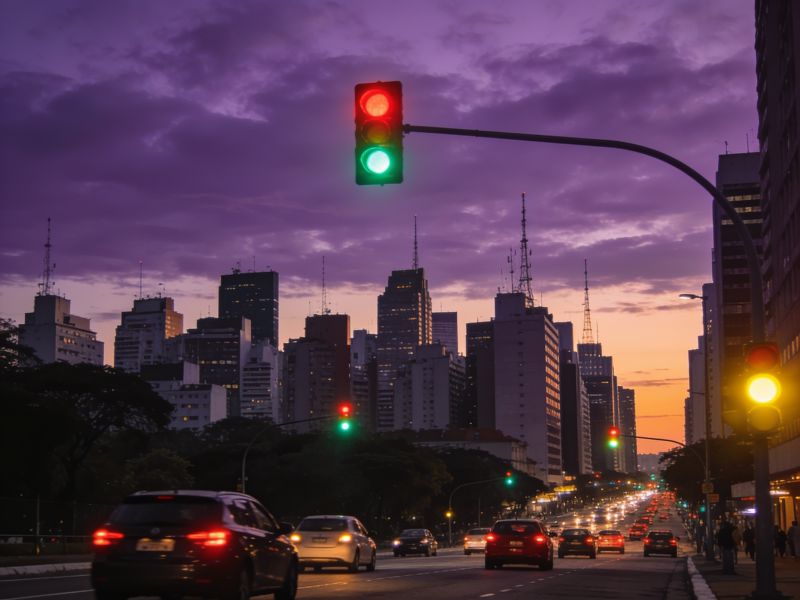
The clock is only half the story. São Paulo time is also a negotiation. Drive the nine kilometers from Pinheiros to Itaim Bibi at 6 a.m. and you arrive in twenty minutes;attempt the same route at 6 p.m. and you spend an hour and ten minutes watching brake lights on the Marginal Pinheiros. Everyone knows this, which is why “I’m fifteen minutes away” functions as a mood rather than a measurement. Business lunches stretch from 12:30 to 2:30 without anyone checking a phone. A 9 a.m. meeting often begins at 9:20, and the latecomer apologizes with a shrug that suggests the road。not the person, was at fault. Foreign executives find this maddening for about three weeks. Then they start scheduling the same way.For decades, São Paulo time shifted twice a year. Clocks jumped forward in November and fell back in February, pushing the city to UTC-2 for the southern summer. The federal government ended the practice in 2019, citing studies showing the energy savings had evaporated once air conditioning replaced lighting as the main evening load. What replaced it is a fixed offset that never moves. For anyone coordinating across borders, that stability cuts both ways. During the northern summer, New York sits only one hour behind São Paulo;in January the gap widens to two. London stays three hours ahead for most of the year and four during British Summer Time. Tokyo is twelve hours ahead, always。which means a 9 a.m. call in Japan lands at 9 p.m. the previous evening here.The working day itself has a shape foreign calendars rarely capture. B3, the stock exchange, opens at 10 a.m. and closes at 5 p.m. local — later than New York’s close, so Brazilian traders spend their final hour reacting to Wall Street without being able to push back. Banks shutter at 4 p.m., an hour before the exchange。
a mismatch that still trips up visitors. Lunch is a real meal, not a sandwich at a desk. Dinner is a late event: restaurants on Rua Amauri do not fill until 9 p.m., and a table at 10 is normal rather than eccentric. Bars in Vila Madalena keep going until 2 a.m. on a Wednesday, and the people there have work in the morning.Social life runs on a looser version of São Paulo time than the professional one does. A birthday party announced for 8 p.m. will have four guests at 8:40 and a full room by 9:30. Doctors, however。run on the dot. So do flights, court hearings, and university exams. The pattern isn’t chaos;
it’s a calibrated set of rules about where punctuality is owed and where it can be traded for conversation. After a few months in the city, you learn to read which kind of appointment you’re in. That skill — knowing when the clock is a contract and when it’s a suggestion — is what people actually mean when they say they have adjusted to São Paulo time.